
If you have thought about building separate apps for iOS and Android, you already know the math. Two codebases, two teams, two budgets, twice the headaches. Most businesses get around that problem with hybrid app development. It’s what we’ve been doing for the last decade.
Owebest Technologies develops Cross Platform Mobile Apps using React Native, Flutter, Ionic and Xamarin. One codebase, two platforms, without any of the performance penalties that gave hybrid apps a bad name years ago. Things have gone a long way.
We don’t do just the code, we do the whole project. That means talking to you at the outset to find out what you're really trying to do, designing interfaces that your users will find intuitive, writing the code, testing it out properly, getting it through App Store and Google Play submissions, and being around afterwards when something inevitably needs tweaking. Specifically, here is how our time is spent:
Not a template. Built for your business. We work across both platforms from concept to deployment.
Good design on mobile is more than just looking nice. It's about working the same way across a dozen different screen sizes and os version. We prototype before we build so you don’t have to guess what you’re going to get.
Payment gateways, social platforms, CRMs, ERPs, IoT devices, etc. Most apps have to talk to something else and it’s often in cleanly connecting those systems that projects get complicated. We have done it enough times to know the pitfalls.
Already have a native iOS/Android App and want to merge? We can move it without losing any features, or breaking the experience.
The real answer is: it depends on what you’re building. But for the vast majority of apps, hybrid is the right choice.
You build once and deploy to both platforms simultaneously. This can save up to 50% development time vs. two separate native builds. It also means one release cycle, one team to coordinate, and one set of updates to push. That adds up to real cost savings over the life of the project, not just at launch.
The gap in performance between hybrid and native has come down quite a bit. Frameworks like React Native and Flutter provide you with smooth animations, full access to device hardware (camera, GPS, push notifications) and native-feeling experiences. Native still has a clear advantage where applications are heavily graphics-intensivethink console-quality games or real-time 3D rendering. Hybrid works for everything else.
Another point to mention is the offline functionality. Hybrid apps can cache data locally so your users are not locked out when they lose connection. We bake that in by default where it counts.
Facebook open source cross-platform app development framework for native-like apps with JavaScript.
A UI toolkit created by Google, built with Dart. Build high-performance apps for iOS, Android and the web from a single codebase with pixel-perfect UI.
Ionic is built on top of Angular and Cordova, and allows rapid hybrid development with web technologies.
(.NET MAUI) Share up to 90% of code base across platforms with Microsoft’s C# and .NET framework.
Ionic’s modern replacement for Cordova, with a plugin ecosystem for access to native device features.
We follow a simple six step process, no surprises, no milestones.
We start with a structured session to understand your goals, your users and your platform’s needs. You get a full project specification before any development starts.
Based on your brand, we prepare wireframes and interactive prototypes. Design first. Second, code.
Certified developers build your app in agile sprints, using the framework of your choice – React Native, Flutter, Ionic or Xamarin – and deliver updated versions every week for your review.
Functional, performance, security and usability testing on 20+ device-OS combos before release sign-off.
We handle all the publishing to Apple App Store and Google Play including metadata, screenshots and basic ASO.
Crash monitoring, OS compatibility updates and feature improvements keep your app fresh and competitive well beyond launch.
10+ years of hybrid mobile apps delivery 20+ industries 500+ projects delivered worldwide.
We have live certifications in React Native, Flutter, Ionic and Xamarin, built on today’s standards, not yesterday’s.
One code base for all platforms, so no duplication of effort. You hit the same audience, at a fraction of the budget.
Offices in India, USA, Dubai and Australia. We work in your time zone with weekly progress reports and no surprises.
Every app we build comes standard with Security AES-256 encryption, OAuth 2.0, GDPR-compliant data handling, and SSL pinning.
Hire on fixed price, time & materials or dedicated developer basis. Detailed breakdowns before you commit to anything.
HIPAA compliant telemedicine apps, patient portals and EHR integrations for hospitals and digital health startups.
Secure PCI-DSS compliant integrations for mobile banking, payment wallets and insurance applications.
Omnichannel shopping apps featuring real-time inventory, loyalty programs & checkout.
Apps for fleet tracking, delivery management and warehouse operations for field and operations teams.
Organisations eLearning platforms, LMS integrations and student engagement applications.
Ordering, delivery tracking and loyalty apps for restaurants, chains and cloud kitchens Real Estate Property search, virtual tours and broker management apps for agencies and proptech platforms.
Booking engines, itinerary managers and concierge applications for travel brands and OTAs.
Manufacturing inventory management apps, production monitoring apps, workforce coordination apps.
Applications for dealers and fleets covering automotive diagnostics, service scheduling and fleet management.
We also work with Telecom, Insurance, Media, Energy and Non Profit organizations.
Hybrid apps are written with one code, then deployed to both iOS and Android, using frameworks like React Native or Flutter. Native apps are created separately for each platform using Swift or Kotlin. Hybrid is 30-40% cheaper, and faster to launch. Native is better for graphics intensive applications.
React Native is for high performance consumer apps. Flutter is great for visually rich, pixel perfect UIs. Ionic is a good choice for enterprise apps using web technologies. After we discover your specific requirements, we will recommend the right fit.
Simple apps take 8-12 weeks. Medium complexity apps with integrations 3-6 months. Enterprise applications: 6–12 months. After the discovery phase we provide a firm timeline.
Yes. React Native and Ionic apps cache data for offline use and offer core features even when offline. Where appropriate we develop offline-first architecture as a matter of course.
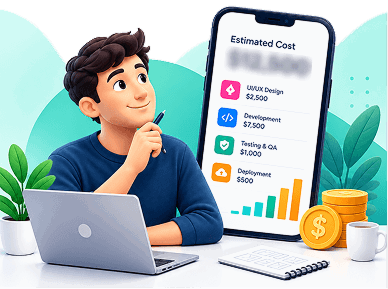
Starting at $5,000. Final cost will be based on features, integrations, design complexity and timeline. Call us today for a free, no hassle estimate on your project.
Yes. Our native to hybrid migration retains existing functionality and consolidates into a single codebase. Migration is typically 4-8 weeks in duration depending on complexity.
We take pride in building long-term partnerships and delivering solutions that truly make a difference.
Owebest did an excellent job working on my plugin! I will definitely hire again to work on this project in the future. The only issue is that it took just a little bit of time to get them to understand what exactly my project was, but after we sorted that out, they performed remarkably.
Put in a lot of effort to understand the scope of work, and suggested good solutions! will hire them again!
Great work ! It was a pleasure to work with Owebest ! I'm very happy about the solution they developed for me ! We sometimes had some communication issues but all together I'm more than happy with their work!
We have being working together for a long time. They are awesome.
39, Vidyut Abhiyanta Colony, Pradhan Marg, Malviya Nagar, Jaipur
Rajasthan- INDIA
7901 4th St N suite 300St. Petersburg, FL 33702, USA
22-40 Sir John Young Crescent WOOLLOOMOOLOO NSW 2011 AUS
ISO-certified, CMMI Level 3 company delivering reliable, scalable, and high-performance digital solutions across the globe.